iPhone vs. Android: There’s No “Right” Answer — Just the Right Fit
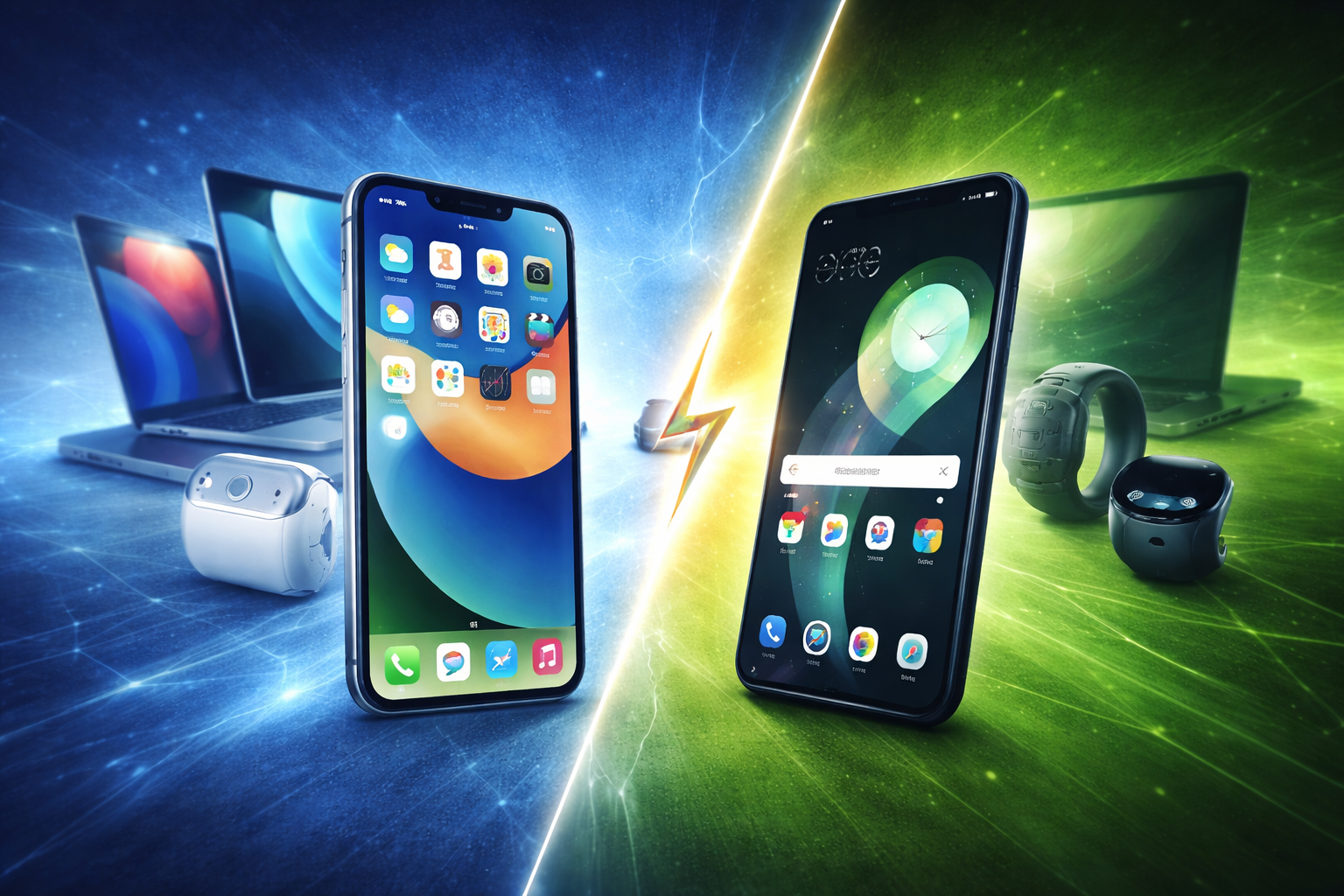
Much like the Mac vs. PC debate, the iPhone vs. Android conversation has a tendency to turn into a team sport. People get very passionate very quickly.
At Ultrex, we take a different view:
👉 They’re just tools.
Good tools — powerful ones — but still tools. And the best choice depends on how you use your phone, what you care about, and what ecosystem you already live in.
Let’s walk through it the same practical, no-hype way we do with our clients.
iPhone: Where It Really Shines
Apple has built a very specific experience — and when it fits, it fits extremely well.
🔐 Security & Updates (Quietly Excellent)
One of the biggest advantages of iPhone is consistency:
- Updates go to everyone at the same time
- Security patches aren’t dependent on a carrier or manufacturer
- Devices are supported for many years
That means fewer “forgotten” phones floating around with outdated software — which is a big deal for both personal and business security.
🔄 Ecosystem Integration
If you already use:
- A Mac
- An Apple Watch
- AirPods
- An iPad
…the iPhone experience gets significantly better.
Messages sync everywhere. Files move effortlessly. Calls, texts, photos, and notes just show up where you need them. You don’t have to think about it — and that’s kind of the point.
🧠 Simple, Predictable Experience
Apple makes opinionated choices:
- Limited customization
- Clear defaults
- Fewer knobs and switches
For many people, that’s a feature, not a bug. Things behave consistently, apps tend to follow the same design rules, and the learning curve is shallow.
iPhone Downsides
Apple’s strengths come with tradeoffs.
💰 Cost
iPhones are expensive — especially at the higher storage tiers. You’re paying for:
- Hardware quality
- Longevity
- Ecosystem integration
That’s not wrong, but it is something to be aware of.
⚙️ Less Flexibility
If you like to:
- Deeply customize your home screen
- Change default behaviors
- Tweak system-level settings
iOS may feel restrictive. Apple decides how many things work, and you operate inside those lines.
🤖 Android Users Don’t Get the Magic
Just like Macs without an iPhone, iPhones without other Apple devices lose a lot of their advantage. The ecosystem benefits are real — but only if you’re in the ecosystem.
Android: Where It Excels
Android is a very different philosophy.
🔧 Choice, Flexibility, and Control
Android gives you:
- More customization
- More control over defaults
- More options for launchers, apps, and workflows
If you like making your phone yours, Android is hard to beat.
📱 Hardware Variety at Every Price Point
Android runs on:
- Budget phones
- Flagship phones
- Foldables
- Rugged devices
- Specialty hardware
You can get:
- More features for less money
- Very high-end hardware without Apple pricing
- Exactly the form factor you want
🌐 Works Well Across Mixed Environments
Android plays nicely with:
- Windows PCs
- Chromebooks
- Linux
- A wide range of smart home and third-party devices
If you live outside the Apple ecosystem, Android often feels more natural.
Android Downsides
With freedom comes… complexity.
🔄 Fragmented Updates
Updates depend on:
- The phone manufacturer
- The carrier
- The model
Some phones get updates quickly and for years. Others don’t. This inconsistency can be frustrating and, in some cases, a security concern.
🦠 Higher Exposure to Junk Apps
Android’s openness means:
- More choice
- More flexibility
- More opportunity for bad apps
It’s easier to install sketchy software accidentally. That doesn’t mean Android is “insecure,” but it does mean users need to be a bit more aware.
🧩 Inconsistent App Quality
Because Android runs on so many devices, app quality and polish can vary more than on iOS. Most major apps are great — but the long tail can be hit or miss.
So… Which One Should You Pick?
Here’s how we usually frame it.
iPhone Is Often the Right Choice If:
- You already use Apple devices
- You value long-term updates and consistency
- You want things to “just work”
- You don’t care much about customization
Android Is Often the Right Choice If:
- You want flexibility and control
- You use Windows or mixed platforms
- You want more hardware options or better value
- You enjoy tweaking and personalizing your setup
Neither choice is “more professional,” “more secure,” or “better” in a vacuum.
The Ultrex Take
Just like with Macs vs. PCs, we don’t believe in one-size-fits-all answers.
We help people choose tools based on:
- How they actually work
- What devices they already own
- Their tolerance for complexity
- Their budget
- Their security needs
And because we don’t bill per ticket or per visit, we’re not incentivized to push one platform over another. Our job is to help you land on the option that fits you — and then support it properly.
If you’re unsure which direction makes sense for your situation, we’re always happy to talk it through. No hype. No platform wars. Just practical advice.
👉 Pick the right tool — and make it work for you.